Percentage Change vs Percentage Points: Know the Difference
Learn why a change in a percentage and a change in percentage points are not the same thing.
Begin with the original value
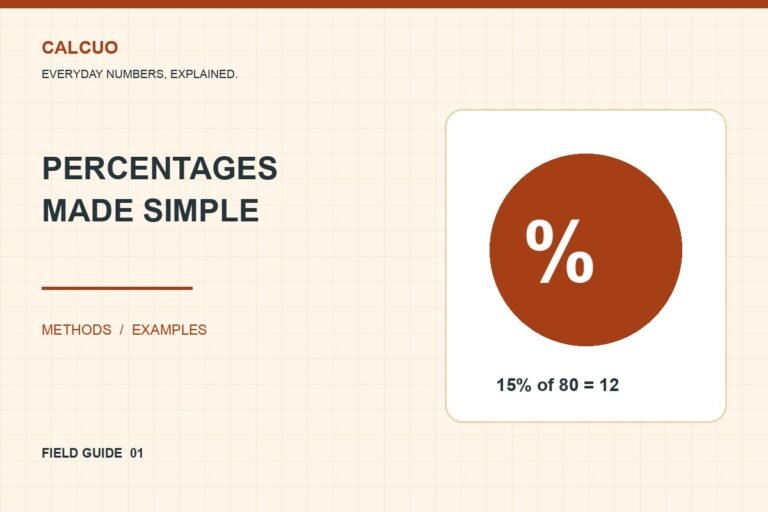
Percentage change compares a new amount with an original amount. Subtract the original from the new value, divide that difference by the original, and multiply by 100. The original value is the reference point, so changing the direction of the comparison can change the answer.
Calculate a straightforward increase
If a count rises from 40 to 50, the increase is 10. Divide 10 by 40 and multiply by 100 to obtain a 25% increase. If the count later falls from 50 back to 40, the decrease is 10 ÷ 50 × 100 = 20%. Equal differences do not necessarily mean equal percentage changes.
Understand percentage points
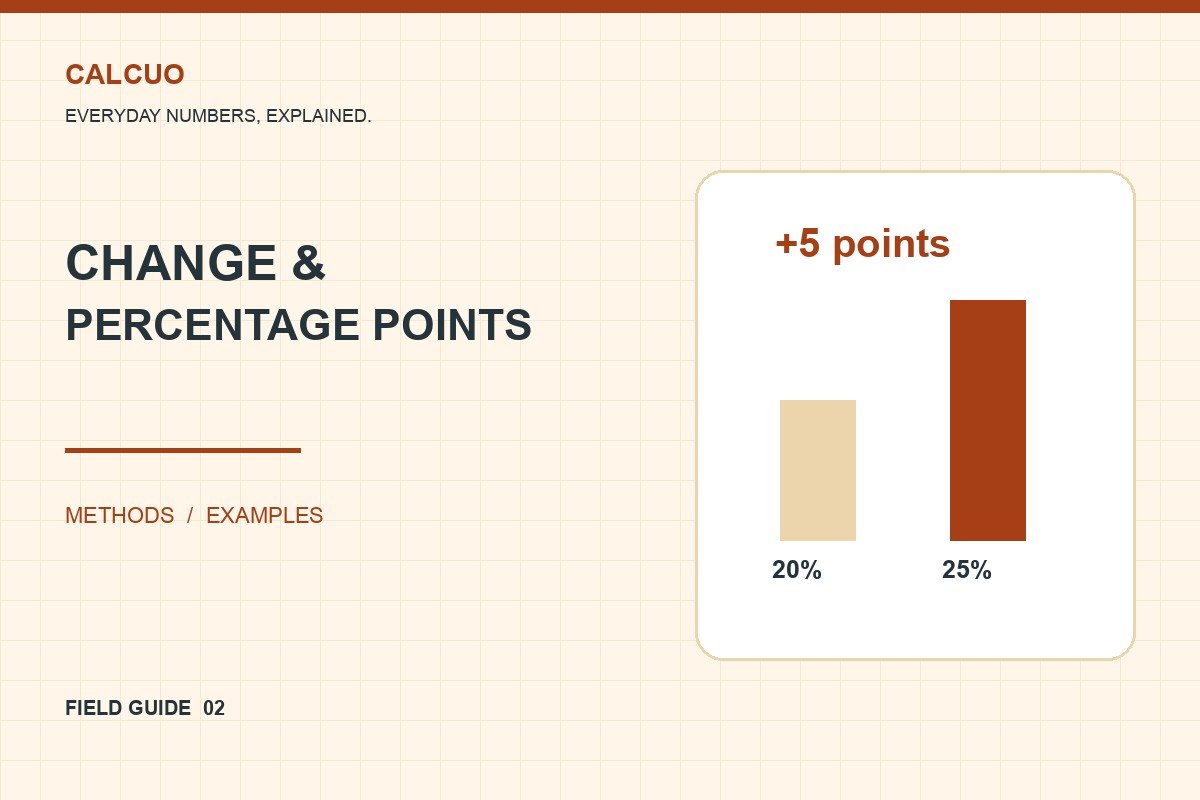
When the numbers being compared are themselves percentages, their direct difference is measured in percentage points. A rate moving from 20% to 25% has increased by 5 percentage points. Relative to the original rate, it has increased by 25%, because 5 ÷ 20 × 100 = 25. Both statements can be correct, but they describe different things.
Keep the wording precise
Write “from 20% to 25%, an increase of 5 percentage points” if the direct difference matters. Add the relative change only if it helps your reader. Saying simply “up 5%” would be ambiguous in this example. Always make it clear whether you are comparing amounts, rates or proportions.
Watch for special cases
The usual percentage-change formula cannot be used when the original amount is zero because it requires division by zero. Describe the absolute change instead. Negative starting values can also produce unintuitive results; explain the context rather than treating the output as an ordinary growth rate.
Check the comparison period
Before comparing two figures, confirm that their units and time periods match. A weekly total cannot be compared directly with a monthly total as though they cover the same period. Report the original value, new value, absolute difference and calculation method when clarity matters. Round only after completing the calculation.